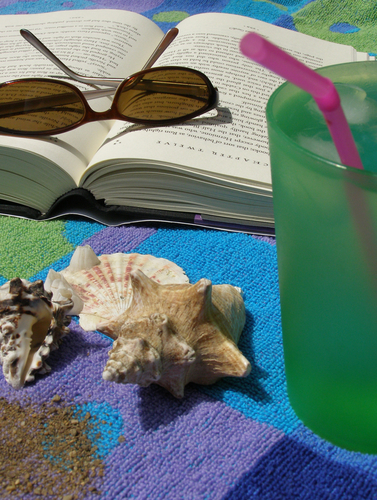
 As finals and papers bare down on the few days remaining before that sweet three-month freedom called summer vacation, I started to get plans ready for my long awaited leisure time.
 One of the things I look forward to the most is catching up on all the reading I put off during the year, and I’m not talking about textbooks. A lot of us haven’t had time to sit down and read a good book in years.
So if you have time this summer to read a book or two, I suggest a few from the list below. A few are from my own summer reading list and others are some I think should be on yours.
Happy Reading.
“The Help” by Katheryn Stockett
After listening to this one on audio book, my mother practically begged me to give it a listen. Over spring break I decided to try out the first few chapters. Needless to say I almost stole her iPod when I had to come back to school. So I bought a copy in the airport terminal and crammed in almost half the book on my flight back. Finishing this book is first on my to do list this summer.
“The Help” tells the story of four women living in the early 1960’s Jackson Mississippi. The story is told from the multiple points of view of each of the characters, allowing us to fall in love with these amazing women one at a time. The story is rich with not only beautifully developed characters, but also a nail biting mystery/drama. Want “The Color Purple” meets “Desperate Housewives?” Trust me. You do.
And I would hurry because it will probably be a feature film within the year.
“Acceptance” by Susan Coll
Acceptance deals with teenage issues of identity, depression, and in the midst, making a decision that will alter your entire life. It really examines the idea of a seventeen year old deciding what they want to do for the rest of their life, and the pressure to succeed. It follows several high school students during their senior year and the challenges and difficult decisions they face.
I read this book the summer before my senior year of high school. I was caught up in the madness of S.A.T. tests and college applications and was nowhere short of loosing my mind. Everybody around me had an opinion except for me.
The tone of this book is perfect for a student lost in transition, whether it is grad school, the work force, or your parent’s basement. Big decisions coming up? Let “Acceptance” put things in perspective.
“Shadow Puppets” by Orsan Scott Card
“The Ender Series” is a fabulous series of books I have been reading on and off for the past four years. They tell the story of a futuristic world where humans do battle with aliens. Except their army is fully composed of children. Genius children who are put through rigorous academic and strategic training in order to create the perfect soldiers and commanders for the most powerful army in the universe. For those of you interested in a sci-fi novel you will actually be able to understand, look no further than here.
It currently consists of eleven novels and ten short stories, most of which can be read independently of each other. As a general rule of thumb, I would start with the first book Card wrote, “Ender’s Game” and go chronologically in the order they were published. If this advice seems strange, that’s because the story of the “Ender Series” is not completely linear.
But don’t feel like you need to tackle every single one. I just give you fair warning of the consequences of falling in love with a book that has 9 sequels.
And after four years, believe me, I would know.
“Lamb” by Christopher Moore
This is another recommendation from mom that I have not gotten to yet. It supposedly tells the story of Jesus through his childhood friend Biff. A lighthearted satire of the life of Christ from his childhood days up until his crucifixion may be just the dose of irony my summer needs.
Those who fear blasphemy should probably stay away however. A coming of age story of young Jesus that is described as “slapstick” will probably not be appreciated by his more faithful followers.
But if you are like me, religiously defunct, this should be right up your ally.
“Eat Pray Love” by Elizabeth Gilbert
This is another book I bought over winter break and never finished. Because of its notoriety and fame I figured I would finally give it a try. It is a true story about a woman who, after an emotional divorce, sets out to far continents looking for the love and meaning missing from her middle-aged world.
I hear the film version for this one is already in the works. So if you have not read it yet, now would be a good time.
“The Lovely Bones” by Alice Sebold
For those of you who saw the movie before reading this book, I apologize. This is one of my personal favorites.
“The Lovely Bones” is a beautiful story about a young girl who was murdered by her neighbor, and must watch from heaven as her family tries desperately to solve her murder. It is a stirring coming of age tale for the friends she leaves behind, and an emotional take on family and love.
You may shed a tear or two, but I can’t stress the amazing feeling hope left after reading this book. Do not be deterred by the heavy subject matter. There is actually much more to happy about in “The Lovely Bones” than sad.

